
Parent Consultant for Fathers
Fatherhood is about relationship — not control.
If something feels off in your parenting, you don't have to figure it out alone.
I work with fathers who want a different way to be with their children. My work is grounded in Gordon Neufeld's attachment-based developmental approach.
Contact me if you need help figuring all this dad stuff out :)

What I help with
- Struggles in the relationship with your child
- Anger, distance, or constant conflict
- Feeling unsure what to do as a dad
- Wanting to parent without control or power struggles
How it works
- We start with a free intro call.
- You share what’s going on.
- What do you need help with
- And then we see if I am the right one to help you
Fatherhood grounded in the Neufeld Approach
My work is grounded in the attachment-based developmental approach developed by Dr. Gordon Neufeld, with whom I work closely as part of the core staff at the Neufeld Institute.
Gordon Neufeld helps provide you with a lens to see development as something that unfolds naturally when conditions are right.
Children don’t need to be shaped into becoming “good” or “well-behaved.” They need the right conditions to grow.
This means:
focusing on relationship, not control
understanding behaviour as a signal, not the problem
supporting maturation instead of trying to force change
Whereas most parenting models and so-called "experts" focus on:
teaching skills
correcting behaviour
shaping children to fit expectations
This approach does something else. It starts with the understanding that development unfolds when they can rest in a secure relationship with the adults responsible for them.

Do you need help with your parenting?
We’ll start with a free intro call to see if I am the right fit to help you.
A lived fatherhood
I am the father of four children, and I have been a dad in many different forms.
Life with my wife, Cecilie, has taught me a lot. About relationships. About parenting. One of the pieces of advice I often give men is this: listen to your wife. She has usually thought a whole lot more about this parenting thing than you have, and read a lot more. I know that living with Cecilie has shaped much of how I understand my role as a father.
Cecilie is a trained psychologist and works as a parent consultant for women. And sharing our lives together, I have gotten to see the world through her lens, see how she thinks, how she listens, how she cuts through to what is actually going on. Over time, that shapes you. Not as a theory thing. More as… You live together, and you learn.
She was also the one who really pushed for us to travel full-time. To stop thinking of “family” as something that happens inside a house, and instead see it as something you live in relationships and in community. That shift has meant a lot for us. For me.
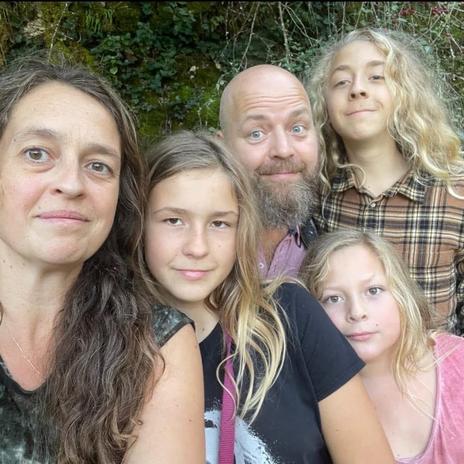
Cecilie and me together with our three youngest (who are all grown now).
And then there’s Liv Ea. When I met Cecilie, she was a single mother, and Liv Ea was five. I became a father from one day to the next. Liv Ea chose me as her father, and I am forever grateful that I got to adopt her. We have four children in total, and each time I became a dad anew, fatherhood changed shape. You don’t get to “figure it out once.” It keeps moving.
In 2010, Cecilie got leukaemia. She went through hardcore chemotherapy. Six months in the hospital. A time of fear, while I was alone at home with three children, not knowing if my wife would survive. Cecilie survived, and we chose that she would stay at home with our children.
The illness changed our lives. We chose life, family, and being together as what mattered most. In 2012, we received a life-giving surprise when our youngest, Fjord, was born. I took full parental leave and stayed home with a baby for twelve months. A real gift.
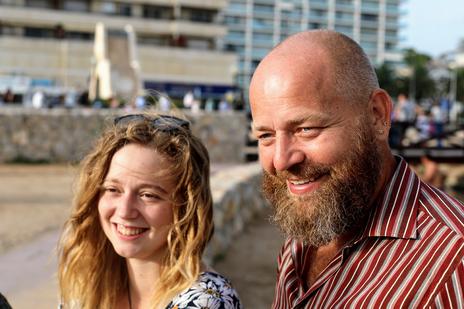
Me and my oldest (now adult) daughter Liv Ea
In 2018, we bought a bus and set out into the world. Since then, we have lived as a full-time travelling family—first with the bus as our base, and later through a mix of road-tripping in our converted Mercedes Sprinter, renting homes in cities around the world, and living close to other families through co-living and shared communities.
Living closely with others becomes a mirror—you see yourself, sometimes it's not fun to look in the mirror. But you learn and grow.
Today, I am the provider, stay-at-home dad, deeply present dad, but I have also been the stressed-out career dad who came home late. The tired dad. The dad is carrying guilt. I have made many mistakes along the way, shouted, been stubborn, and I have had to learn, adjust, and take responsibility again and again.
It is from this lived fatherhood that I meet other fathers.
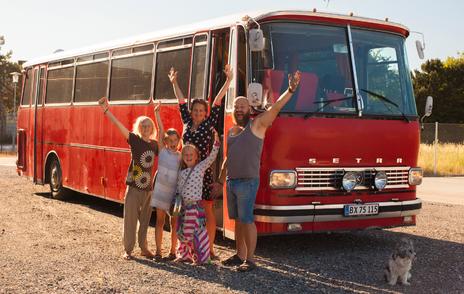
The bus we bought, which ended up becoming our tiny home, parked beside an animal sanctuary near Barcelona.
Parenthood shouldn't be faced alone - Book a parent consultant call
I don’t believe parents were meant to carry the task of parenting on their own.
In Gordon Neufeld’s work, he speaks about the attachment village: children and parents develop best inside a network of close relationships.
When the conditions are right, attachment roots can take hold and unfold.
But this is no longer how most families live.
For many, the attachment village is gone. The nuclear family has become an isolated unit, where two adults — often far from extended family — are expected to carry everything themselves.
It shouldn't be like this. I am here to help you.
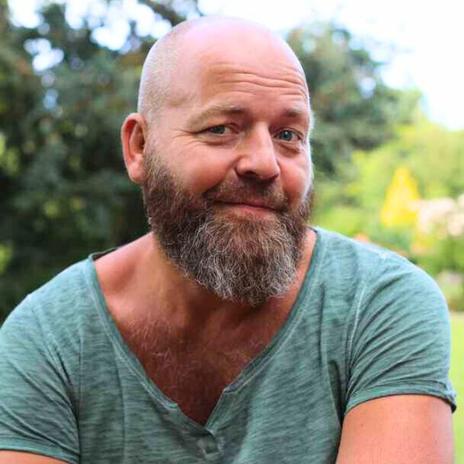
Do you need help with your parenting?
We’ll start with a free intro call to see if I am the right fit to help you.
Fort Lauderdale, FL 33309
United States